As dedicated enthusiasts of survival games, our collective imagination is consistently captivated by narratives that push the boundaries of human endurance against insurmountable odds. Stories with ingenious problem-solving under extreme duress, like The Martian, are some of our favorites.
It was precisely this that ignited our fervent curiosity when news emerged regarding the latest endeavor from 11 Bit Studios, a dev team with a formidable reputation through critically acclaimed titles like Frostpunk and This War of Mine. Their new psychological survival adventure throws us into a deadly alien world that looks straight out of Interstellar with nobody to rely on but other, variant clones of ourselves.
So let’s get into it. Does the story stay interesting, or does the game rely too much on visuals? Is the survival gameplay challenging, or is it merely a method for narrative delivery? Is it too bogged down by symbolism and emotion to be any fun? We’ll be covering all this and much more in this review.
Article Summary
- The Alters is a psychological survival adventure game where Jan Dolski, a crash-landed space miner, creates “Alters”—alternate versions of himself—each with distinct skills, lives, and psychological traumas, to survive on a lethal alien planet.
- Visually and aurally stunning, the game’s motion capture, detailed Alter expressions, and elegant, Death Stranding- and Interstellar-esque sci-fi equipment create fantastic gameplay moments.
- This title boasts detailed environments, a unique style, and a dark sci-fi UI, reminiscent of cerebral sci-fi films. It offers delightful and anxiety-inducing surprises. The spellbinding world and captivating story, supported by stellar music, visuals, voice acting, and writing, make it a must-play for sci-fi survival fans.
Story and Concept
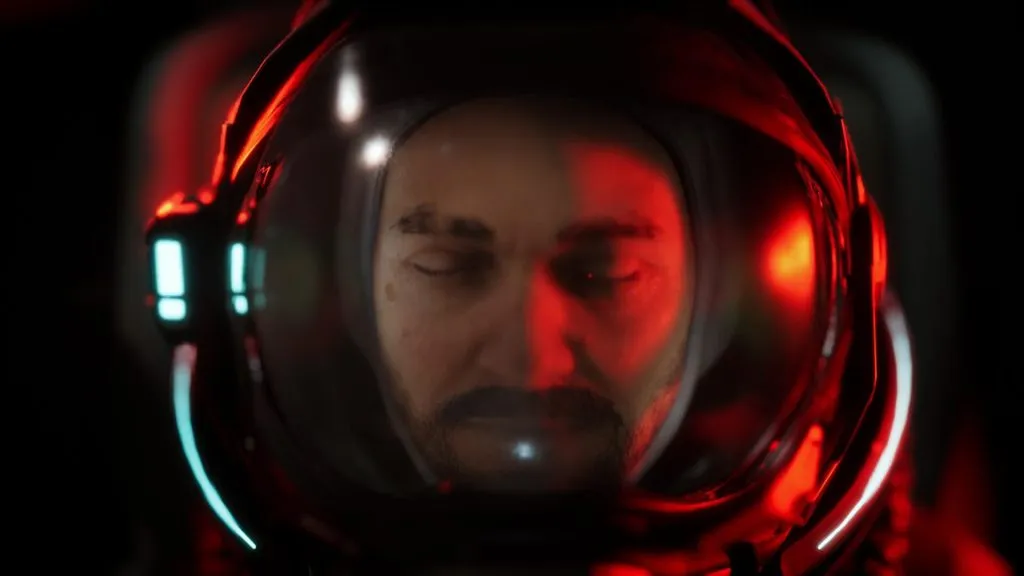
The game opens with our protagonist, Jan Dolski, a builder for the enigmatic and influential space mining corporation, Ally Corp. Jan is placed within a team of specialists and sent out into space as part of numerous desperate missions to locate and retrieve a mysterious element that may hold the key to saving Earth from starvation: Rapidium.
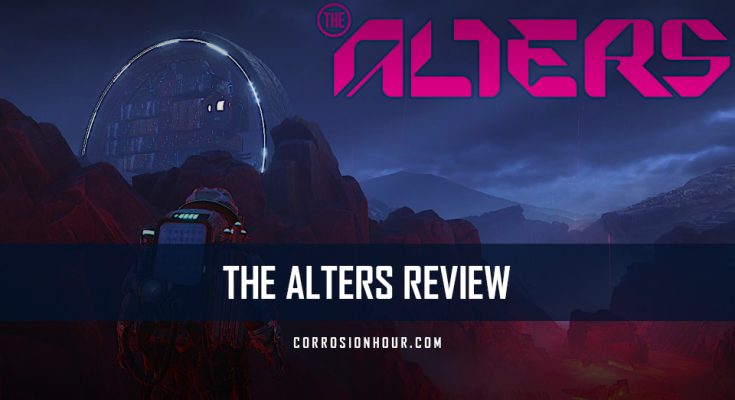
After an unspecified journey, Dolski awakens to blaring alarms as his escape pod jettisons, sending him hurtling toward an unknown and perilous alien world. As he plunges through the toxic atmosphere, we witness the daunting landscape: towering hexagonal stone spires line a jet-black shoreline, while iridescent waves, possibly oil or mercury, relentlessly crash against sheer cliff faces. Flashes of lightning illuminate this hostile, unwelcoming environment, where survival seems impossible for any life form.
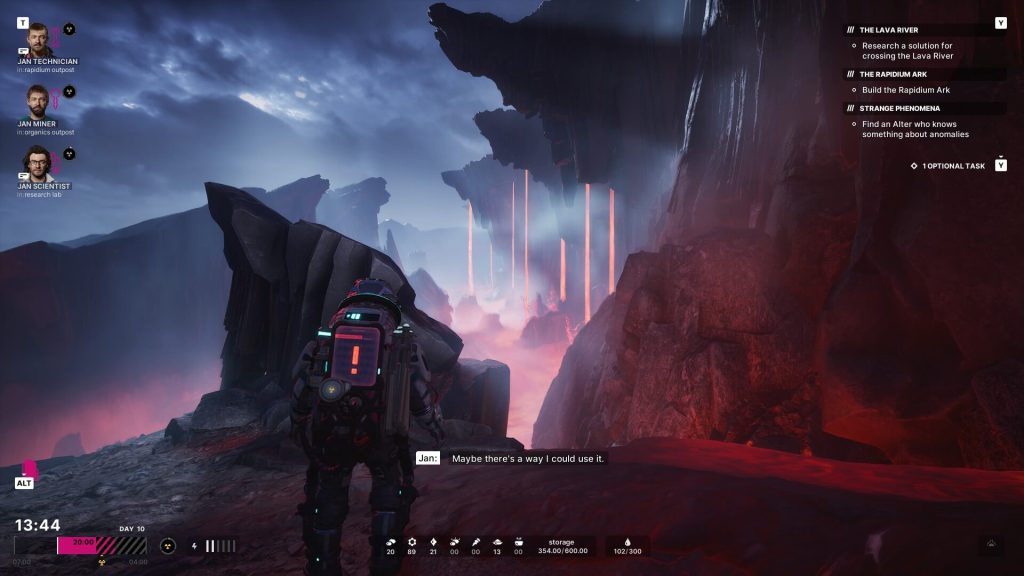
Following a rough landing, Jan exits his pod in an advanced hazardous environment suit. This intricately designed protective gear, resembling a space suit with a mechanized exoskeleton, supports his weight and facilitates movement in the high gravity. The suit’s backpack also functions as part of the UI, displaying meters for energy and radiation exposure in a style reminiscent of Dead Space.
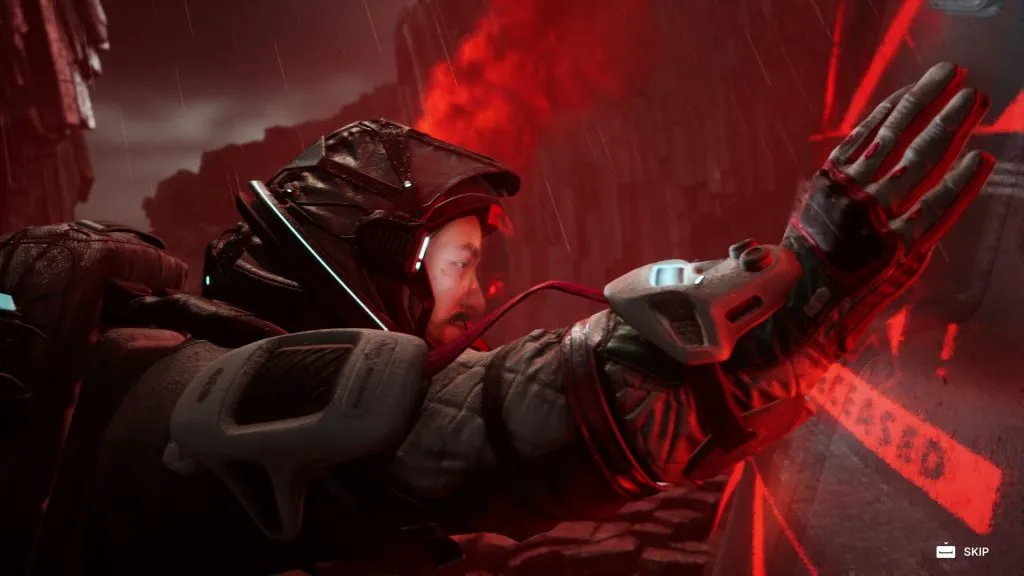
As Jan explores the planet, he discovers his captain’s landing site, only to find the entire crew dead from unknown causes. Despite the grim circumstances, Jan makes it to their expedition ship, an incredibly advanced mobile base shaped like a giant bicycle wheel. This base suspends its structures in its center, protecting them from nightly radiation as long as its filter is maintained. Designed for a full crew of specialists, the base offers little comfort as Jan’s SOS transmissions receive only static. Scared, depressed, and completely alone, Jan prepares to hold out for rescue.
While mining, Jan discovers something incredible: Rapidium. With a sample in hand, he finally receives a response from Earth, promptly learning of his limited time left. This planet’s true danger isn’t its oily seas, seismic shifts, gravitational anomalies, or constant storms. The greatest threat is the sun itself, located dangerously close to one of three stars. This giant, flaming ball of death emits ambient radiation strong enough to atomize steel, and magnetically active light rays create angled water spouts when they strike the ocean – a truly awesome sight.
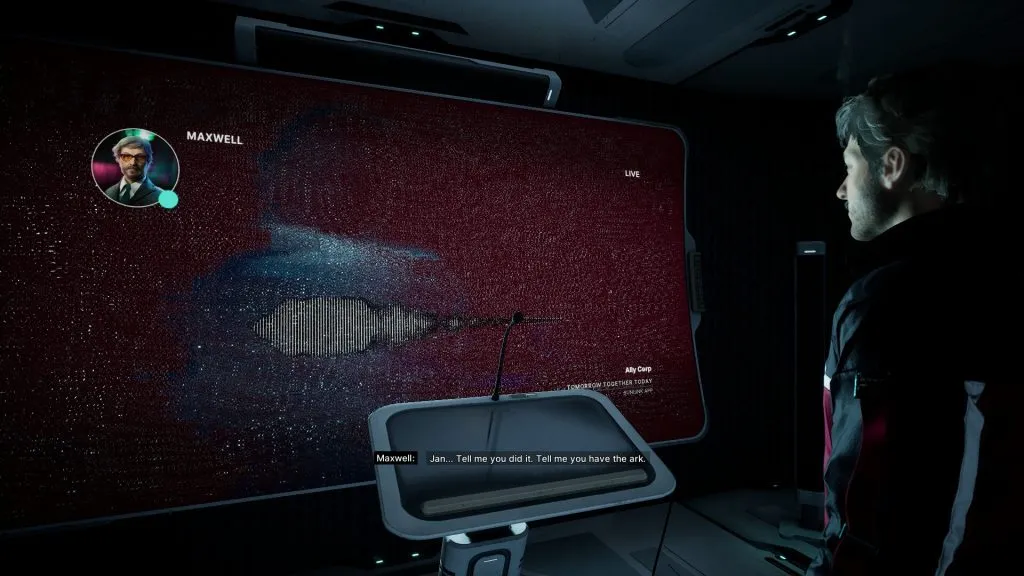
Given full access to the mission’s quantum computer, Jan is instructed to build a “womb” using Rapidium, a substance known for its ability to accelerate the growth of living organisms.
This womb structure will be used to create clones of Jan, but these “alters” are not mere copies.
Each alter is a version of Jan from a reality where his life took a drastically different turn. The game offers a deep dive into Jan’s past, revealing a compelling narrative that includes an abusive father, his decision to leave home, struggles with work and education, and an eventual falling out with his wife. Each alter represents the answer to the question: “What if I made a different choice?” From a writer’s perspective, this setup creates an excellent foundation for exploring the “man versus self” conflict, especially when that “self” could be a completely different man.
Now, Jan and his crew of Alters must struggle to survive and race across the surface of the treacherous planet to reach an extraction point before the sun rises.
Graphics
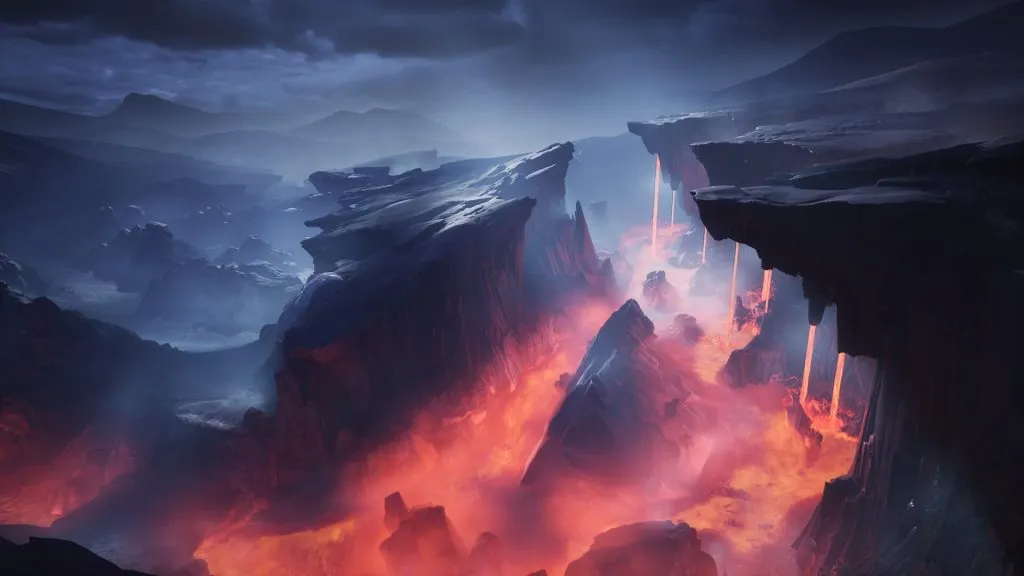
This planet, despite its hellish appearance, is perhaps one of the most beautiful and intriguing in-game locations we’ve ever encountered…you know, in an existentially terrifying sort of way. The varied landscapes showcase incredible and unearthly displays of gravity, magnetism, and radiation, all of which are rooted in scientific principles. It’s truly breathtaking to consider that such sights could theoretically exist on a Three-Body planet somewhere in the cosmos.
The environmental design of the initial biome is stunning, and subsequent levels promise equally fascinating maps. Transforming a lifeless wasteland into something so captivating is no small feat, yet the devs have succeeded. We highly recommend taking a moment to pause and appreciate the views before diving back into the frantic race for survival.
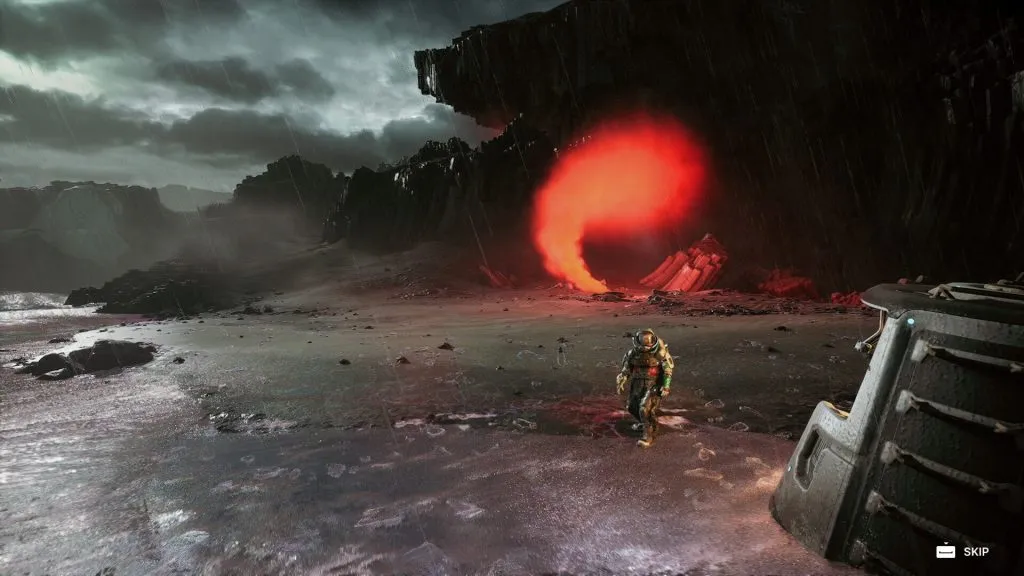
Every aspect of this game, from its environments and incredible music to its animations and models, is absolutely stunning. The impressive motion capture and the subtle distinctions in each Alter’s facial expressions make every interaction smooth and lifelike, whether it’s a desperate escape from an aggressive anomaly or an argument with an angry Alter. The advanced sci-fi equipment is elegantly modeled and impressively detailed, reminiscent of the unique styles seen in Death Stranding and Interstellar.
This is one hell of a looker.
Survival
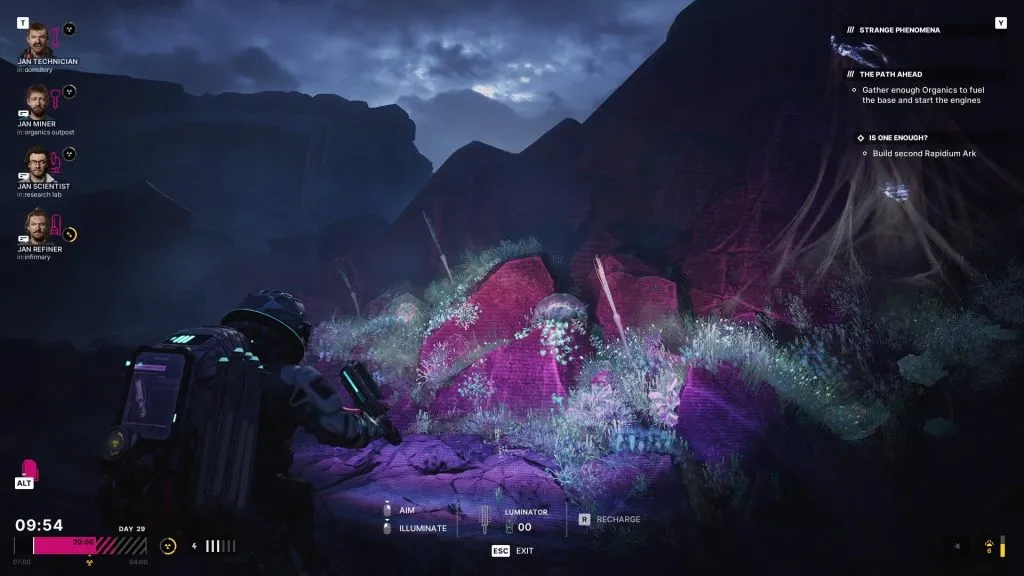
On this deadly alien world, our main objectives are to survive and reach the extraction point. Among the many dangers, none is more lethal than the sunrise. The planet has three separate suns. During “Daytime,” the ambient radiation is low enough for Jan’s suit to provide protection. However, at night, the radiation rises to dangerous levels that can be fatal with prolonged exposure. Eventually, the third sun will rise, incinerating the planet’s surface and obliterating all life. Therefore, time is our most crucial resource.
In-game time will pass in real time, and every action, from crafting to mining to playing beer pong, will cost time. Day is the best time for us and our Alters to work. After night falls, we can continue working if we must, but our progress will be much slower, and radiation will make the outside dangerous. The later we stay awake into the night, the later we’ll wake up the next morning, giving us less time to get work done. And there is always work to be done.

These facilities will need to be periodically repaired to stay functional, and most of them will require a worker to produce anything. With the proper resources, though, these workshops can produce radiation filters, new tools, and, of course, food. Radiation will be the least of our worries if our crew starves to death.
As a builder, Jan can construct new base modules from collected materials. Beyond the pre-installed quantum computer, elevators, quarters, and Command Center, a variety of rooms are available. These include greenhouses, refineries, recreational areas, living facilities, and a “recycler” for waste. Strategic placement of these rooms is crucial for survival, as different facilities have varying space requirements. Moreover, expanding your base adds weight to your wheel, demanding more fuel for movement.
Exploration

Each location our base stops at is its own self-contained level with a different biome, unique threats, available resources, and hidden secrets to be exploited. To harvest materials, locate important technology, and ultimately find a way around daunting obstacles, Jan will have to embark on numerous expeditions over the planet’s surface.
Navigating the dark, desolate landscape can be challenging, but a 3D map and excellent environmental UI simplify the search. For instance, gleaming Red Dust marks metal veins for mining, and blue geysers lead to underground organic deposits. Small resource nodes can be mined manually, but to access deeper deposits, a series of prospecting probes must first pinpoint the deepest point before a drill can be placed for a steady supply.
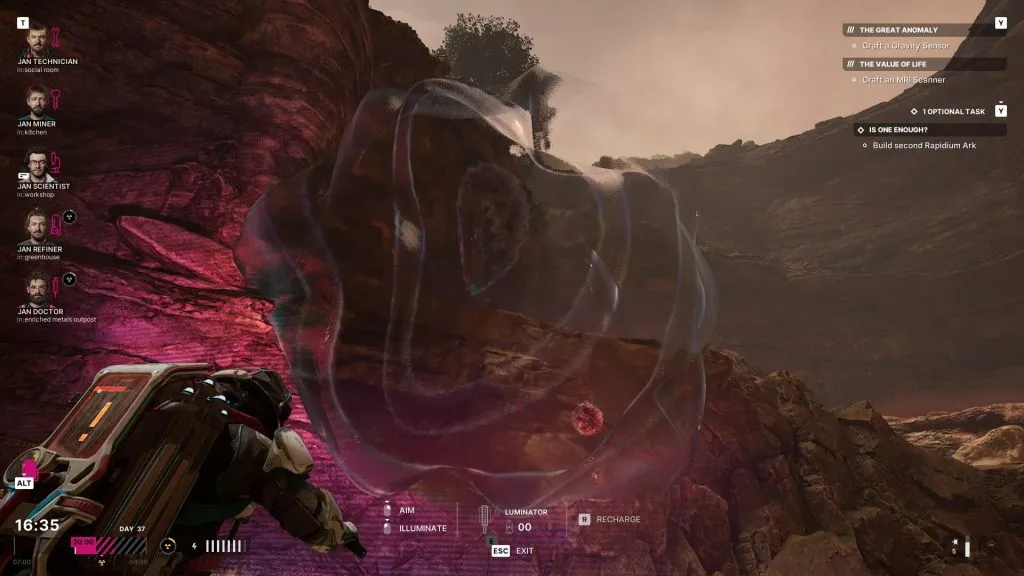
Once located, a mining outpost can be established, which then needs to be connected to the base’s power supply via pylons. These outposts not only facilitate resource production but also function as fast travel points. This field structure system, along with the style of the exosuit and much of the sci-fi tech, strongly evokes Death Stranding, a purely positive comparison given that game’s exceptional visual style.
The landscape offers dangers and obstacles in abundance; however, we may need to research and develop new devices to overcome them. For example, a climbing hook is required to scale sheer cliffs, while a special laser drill can be used to blast through rock barriers. There are also dangerous anomalies that can blast us with lethal radiation or steal hours of time from us in seconds. Dealing with these requires a crazy set of tools we won’t spoil, but the effects for them are incredible.
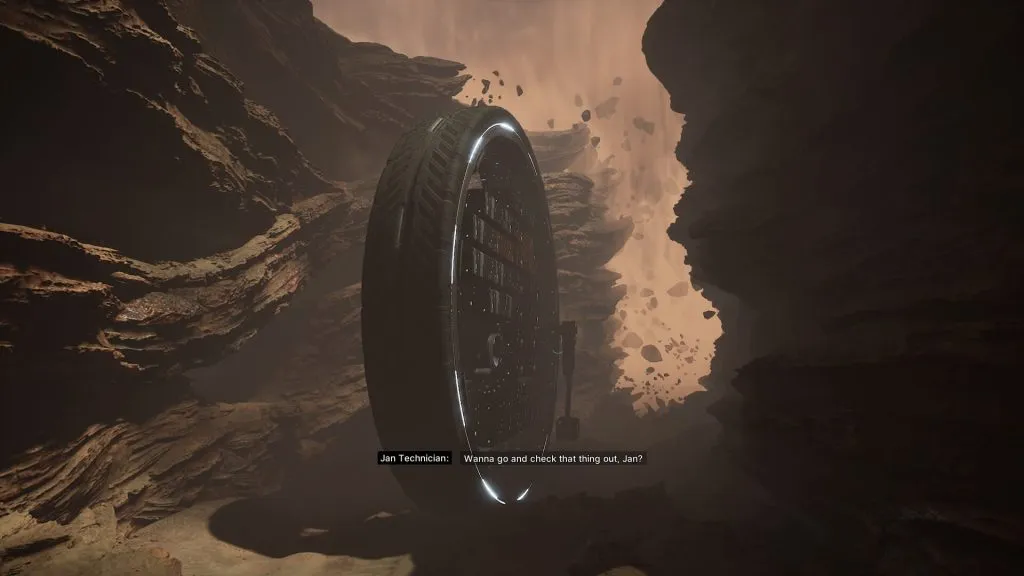
These tools consume suit power or special charges from the base, making strategic route planning and shortcut creation crucial to avoid costly delays, such as waiting for a recharge. As players expand their reach, the game transforms into a platforming puzzle, integrating elements of stealth and survival. The key to advancement lies in mastering each level’s distinct challenges before the sun becomes a fatal threat.
The Alters
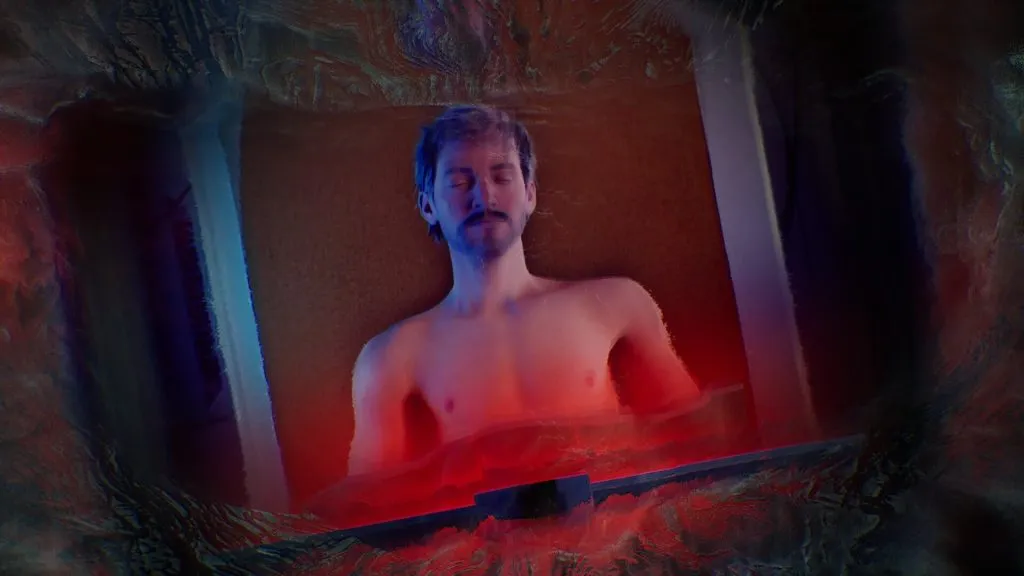
As the title suggests, the fate of our survival and the success of our mission depend primarily on the assistance of our crew of Alters. Each Alter is a clone of Jan, but from a different life path. A different life path means each altar has a different personality and different goals, and will react differently to their situations. They also had different professional experiences, which means each alter has a different set of skills the player can utilize to their advantage.
For example, the Doctor version of Jan can work in the infirmary to rapidly cure injuries or treat radiation, while the Scientist is the only Alter capable of working in the research lab. A couple of the Alters, like the Technician and the Scientist, are mandatory, but from there we can choose which versions of Jan to bring to the mission.

Alters are specialists, but they can serve in a variety of tasks to help you survive. They can work at mining outposts, maintain the base, and research new technology; they can also cook, craft, and perform any other time-consuming tasks necessary to keep the base running and the crew alive. Assigning and managing the tasks they perform and the facilities in which they work are paramount to mission success.
Of course, the more Alters in your base, the more resources it will take to keep them happy and healthy. They’ll need a place to sleep, food to eat, and some way to blow off steam, because these Alters aren’t just mindless clones. They have motivations, anxieties, fears, and wants that all need to be addressed if you don’t want a mutiny. That’s not a joke; if you let them get too upset, they will throw you off the ship without a suit.
An alter’s mental state can be viewed at any time from the menu, and different elements of their mood may change individually, all of which will impact their work. A motivated Alter will work more efficiently, but only a happy Alter will be willing to work a full 9-hour shift in a space suit drilling at radioactive rocks. Different Alters will have different baggage they brought with them, too, and the story will tailor itself around which Alters you have aboard, and how you’ve responded to their dialogue options and requests.
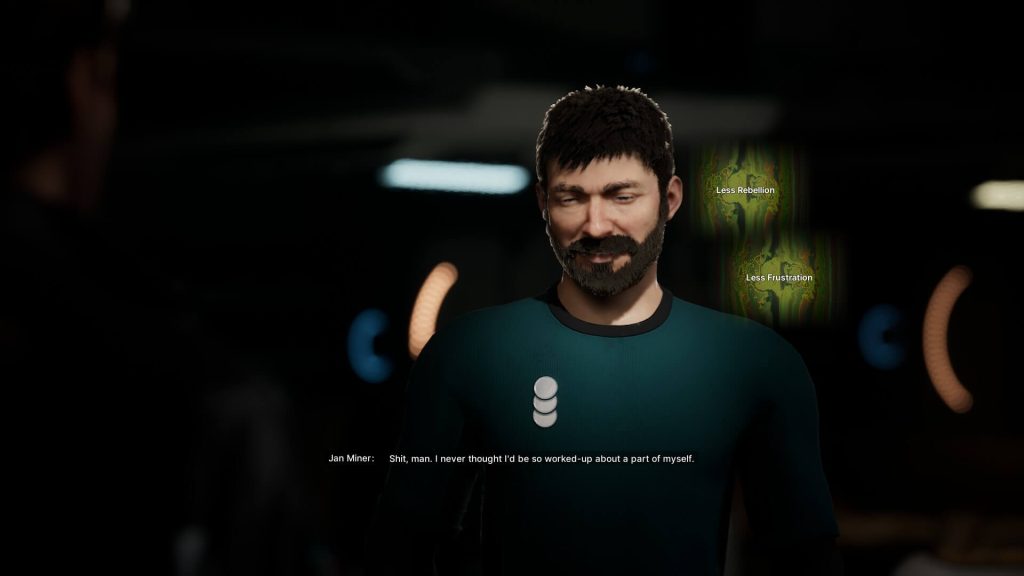
You can always take the simpler, more sustainable path by building recreational rooms and investing in better food. We even have the option of improving the Alters’ moods by watching movies and playing games with them. However, the most significant changes will stem from story events, dialogue choices, and our responses to their requests and personal struggles.
The Alters’ personal stories are captivating, and their individual personalities will either clash or harmonize in unique ways. All of them are troubled, and this title fully embraces the harsh, heart-wrenching, and sometimes mind-bending implications they present. For instance, the Miner version of Jan, who lost his arm in a mining accident, experiences profound terror upon waking up with a fully intact body.
Replay Value
This title’s replay value is primarily driven by its branching narratives and the diverse options available for each Alter’s unique story path. Not all Alters can be created in every playthrough, and their interactions vary, making multiple playthroughs essential to grasp the full scope of the narrative.
Even with the same crew of Alters, each playthrough can differ significantly. Additionally, hardcore difficulty settings introduce a roguelike element, forcing players to restart if they fail to evade the sunrise.
Final thoughts on The Alters

We are completely in love with this game. Not only are the environments rendered in incredible detail and GPU-melting fidelity, but the style and UI are also incredibly unique. Everything about it screams dark sci-fi, and I am entirely on board with that. It feels like playing through one of those underrated, cerebral sci-fi movies where one or two actors are stranded, but that’s all that’s needed because the internal conflict, overlapping with the external, makes for such a captivating story. It’s also one of those titles that includes plenty of goofy, off-the-cuff surprises, making the experience as delightful as it is anxiety-inducing.
The world here is spellbinding, and I’m not just talking about the mysterious planet we find ourselves on. Every answer I received led to more questions, and I mean that in the best possible way. The story is captivating, the music and visuals are absolutely stellar, and the voice acting and writing are top-shelf, earning my serious respect. This is an absolute must-play for sci-fi survival lovers.