Return to The Zone
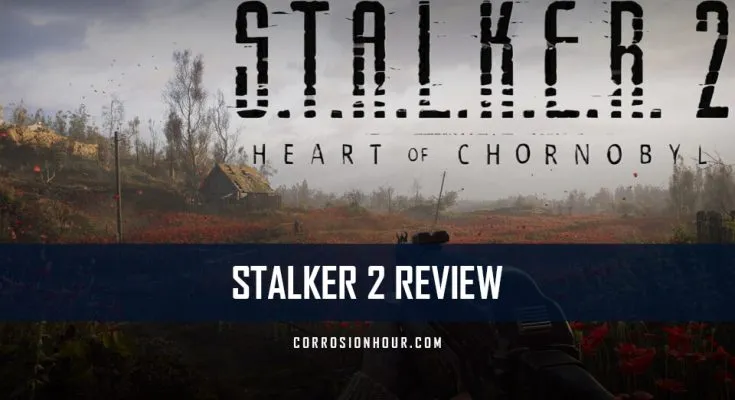
It’s been some months since GSC Game World, the developers of the formative STALKER series, released their most recent iteration, Stalker 2: Heart of Chernobyl. This long-awaited title is the much-anticipated sequel to the influential survival horror RPG, Stalker: Shadow of Chernobyl.
Since its rather lukewarm reception, the developers have been hard at work releasing regular updates to the game, including massive bugfixes, new systems, and infusions of new content. Given the struggles the Ukrainian team has faced due to world events, we felt it was worth allowing some time for polishing and adjustments before weighing in on the game.
So let’s get into it. Has the game changed drastically between launch and now? Is this the dark and gritty Zone we know and love, or something entirely new? Is this a game newcomers to the series can enjoy, or do you need prior knowledge to understand the events?
We’ll be covering all this and much more in this review.
Article Summary
- Years after the events of the first game, ex-special forces operative Skiff loses his home to an artifact. Betrayed by scientists seeking this object, he’s abandoned to survive on his own in the Lesser Zone.
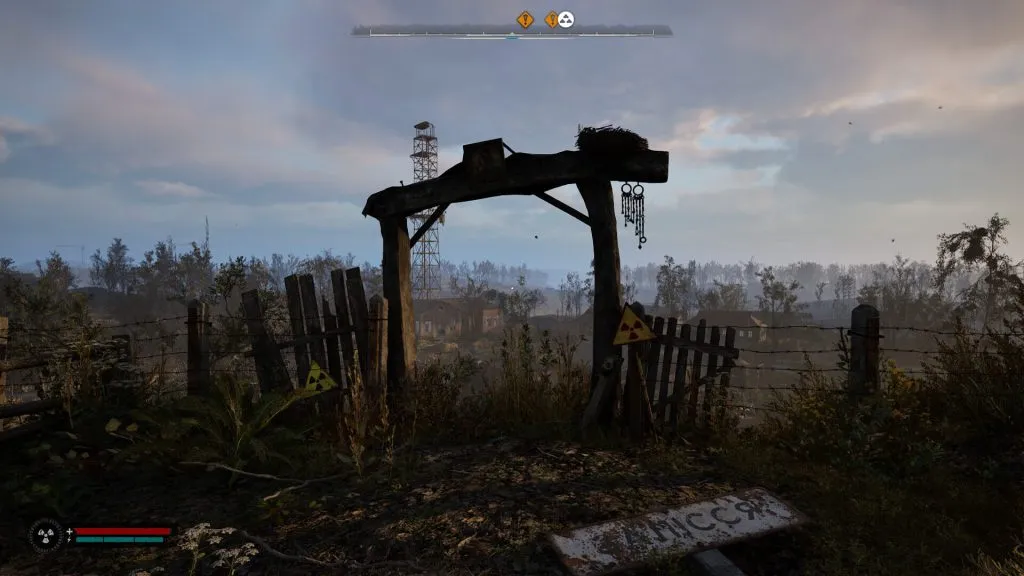
- Stalker 2 is graphically impressive, showcasing detailed environmental design with dynamic weather and day-night cycles that transform the landscape. Anomalous locations are visually striking, offering unique dangers and valuable artifacts.
- Stalker 2 is an immersive survival FPS RPG, similar to Far Cry or Escape from Tarkov, focusing on combat, exploration, and gear management.
- While some details, like gun smoke and weapon effects, are stellar, and weapons feel tight and enjoyable, there are significant rough edges. These include a severe lack of loot variety, looping dialogue, reused assets, and an overall unpolished feel.
Story and Concept
Stalker 2 plunges players into a grim and expansive world, set several years after the harrowing events of the first game. The Zone, a nightmarish landscape born from a catastrophic anomaly, has not only persisted but has also expanded its treacherous reach. Now, it is contained by colossal concrete walls, a stark testament to humanity’s desperate attempt to control the uncontrollable. These imposing barriers are patrolled by an international agency, meticulously studying the bizarre and dangerous artifacts that appear within The Zone.
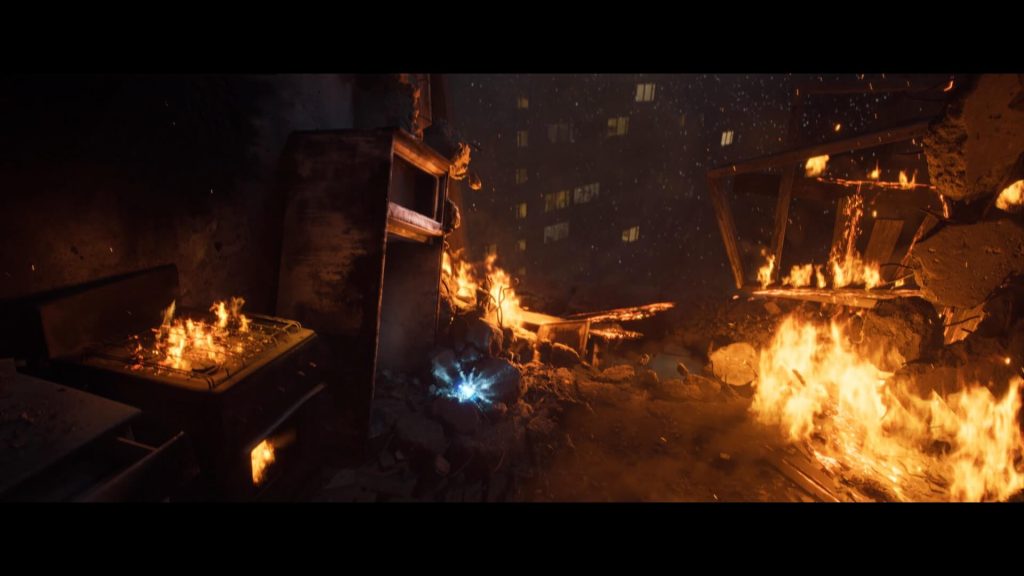
Our protagonist’s journey begins with an unsettling intrusion into the mundane: a mysterious artifact, pulsing with an unseen energy, materializes in a laundry basket. Its emergence is not subtle; it unleashes a destructive force that consumes the protagonist’s apartment in a fiery inferno.
Left with only the clothes on his back, a weathered pistol, and the enigmatic artifact itself, our character’s life is irrevocably altered. This isn’t just any artifact; it’s unique. Unlike countless others discovered outside The Zone, it hasn’t crumbled to dust, a common fate for such objects removed from their chaotic origin. More remarkably, it’s an active “dummy,” a classification previously dismissed as useless. Yet, whispers and theories abound that these “dummies” hold an unknown, dormant power, a power that this particular artifact clearly possesses.

Our character, known as Skiff — a moniker he adopted upon entering The Zone, shedding his former identity — is a former Ukrainian special forces operative. His past is hinted at through his exceptional hand-to-hand combat skills and the intricate engraving on his knife, suggesting a history of specialized training and a hardened disposition. Desperate to understand and control the artifact that has upended his life, Skiff makes a perilous deal with a group of shadowy scientists operating at the very border of The Zone. His objective: to acquire a device capable of recharging his unique artifact, a key to unlocking its secrets.
However, The Zone is a place where trust is fleeting, and betrayal is common. True to its brutal nature, Skiff’s precarious alliance with the scientists quickly unravels. They turn on him, seizing both his unique artifact and the device he so desperately sought. Leaving him unconscious and abandoned in the desolate expanse of the Lesser Zone. This, of course, marks the true beginning of the game.

Skiff awakens to a world teeming with danger and opportunity. He is not alone in this hostile environment; he soon encounters other Stalkers, hardy individuals who navigate the perils of The Zone, driven by various motives – survival, greed, curiosity, or revenge. Through these encounters, players are introduced to the fundamental mechanics of Stalker 2. They learn the vital skills of artifact hunting, a dangerous but potentially lucrative endeavor. Scavenging for loot and equipment becomes a constant necessity, as resources are scarce and every piece of gear can mean the difference between life and death. A wide array of jobs and missions becomes available, offering pathways to earn currency, gain reputation, and uncover crucial information.
But underlying all these activities is Skiff’s unwavering quest: to reclaim his stolen artifact and exact revenge on those who betrayed him. The game transforms into a desperate struggle for survival and retribution within a world that is as captivating as it is terrifying, forcing players to make difficult choices and face the profound consequences of their actions in the unforgiving landscape of The Zone.
Graphics
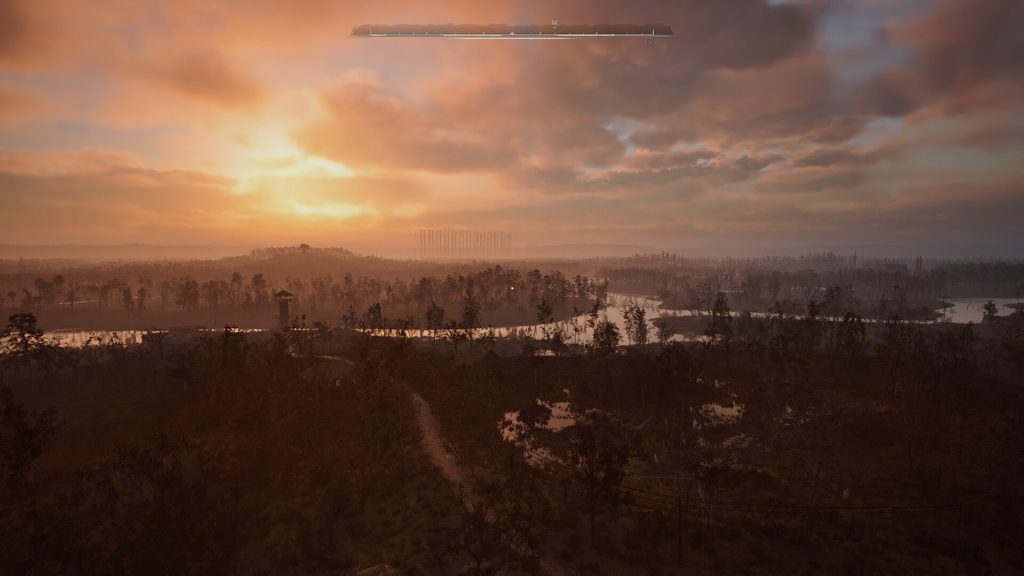
Graphically, The Zone is an impressive display of environmental design, presenting a world that is both breathtakingly beautiful and profoundly menacing. The dynamic interplay of daylight and weather effects creates an ever-shifting tapestry, where familiar landscapes are utterly transformed by the passage of time or the onset of a storm.

At night, the woodlands become hushed and foreboding, a perfect hunting ground for the unseen horrors that stalk the shadows. The sudden onset of an emission, heralded by a distant rumble and an eerie glow, forces players to frantically seek the meager safety of shelter, turning open ground into a death trap. Radiation storms, while incredibly dangerous, are also spectacular, painting the sky with unnatural hues and electricity, a testament to The Zone’s volatile and unpredictable nature. This constant push and pull between The Zone’s bleak reality and its raw, untamed beauty is one of its most defining characteristics.

Breaking up the vast, desolate stretches are special anomalous locations, each a spectacle of visual effects that defy the laws of conventional physics. These pockets of warped reality, where gravity might shift or time itself could falter, are among the most dangerous areas in The Zone. Yet, they are also the most alluring, for within their chaotic confines lie the rarest and most valuable artifacts, ripe for the taking by those brave or foolish enough to venture within. The visual artistry of these anomalies, from shimmering heat hazes that distort the very air to temporal distortions that blur the lines between past and present, further elevates The Zone’s unique aesthetic.

The creatures that inhabit The Zone are equally impressive in their design. Mutant models are fantastically grotesque, each a nightmarish amalgamation of twisted flesh and unnatural biology. While perhaps less unsettling than the pixelated, abstract horrors of the first game, their detailed renditions here offer a more visceral and immediate sense of disgust and fear. The human models, too, are of high quality, despite occasional odd facial expressions. These minor imperfections are often redeemed by the subtle details: a nervous twitch, the chattering of teeth from cold or fear, or the subtle shift of eyes.
Combat and Survival

Mechanically, Stalker 2 shares similarities with popular FPS RPGs like Far Cry, Fallout, Outer Worlds, or Atomic Heart. The core gameplay loop involves following leads and jobs, engaging in combat, and acquiring loot. However, Stalker 2 emphasizes survival over RPG elements. While exploration can sometimes be rewarding, it can also become repetitive.
The largest issues with this title’s exploration loop are the heavy reuse of assets and the severe lack of loot variety. Don’t get us wrong, it feels fantastic to uncover a unique weapon or powerful artifact hidden away in a stash or guarded by deadly anomalies. But, more often than not, your searches will just turn up more bullets, bandages, and bread. The vast majority of the loot you find, and you will find a LOT of loot, will be nothing new or exciting, and more often than not, it won’t even be particularly useful.

While bullets aren’t scarce, they are not limitless. Compared to the first game, enemies take fewer shots to bring down, reducing reliance on melee attacks. However, running out of ammo is still a risk. Different ammo types cater to specific scenarios, such as high-pressure ammo for extra punch or AP rounds for armored foes.
Players are not superhuman; a few rounds to the chest or a nasty hit from a mutant can quickly lead to death. Resource management is crucial in Stalker 2. Beyond ammo, players must manage hunger and rest, and carry bandages for bleeding, alcohol for radiation, and as many medkits as possible.

The AI is admittedly pretty brain-dead, and fans of the original Stalker series will likely be disappointed to note that the famous “A-Life” system was not integrated at launch, and is only now starting to be applied. Enemies will frequently and loudly announce their presence, take cover while still exposing their head, stand in the open when reloading, or group up in doorways just begging you to toss a grenade in. While stealth kills are well-animated, the sneaking system doesn’t function well, especially against mutants who rely on scent.
Melee encounters with mutants can be rather unsatisfying, often devolving into running, spamming medkits, and circling back. Improvements like enemy staggering or stunning, or player knockback/interrupts with melee attacks, could enhance these encounters. Stealth is still pretty disappointing, with wobbly awareness meters making it difficult to gauge enemy detection.

With that said, the impressively immersive systems from the original titles have begun to show through in Stalker 2. Players can now harvest valuable body parts from slain mutants, making the encounters more worthwhile. Wandering stalkers will loot dead bodies for weapons and ammo. Some mutants will even track the player over several kilometers before attempting an ambush. It’s not up to the standards we’d hoped for by now, but it’s a solid start, for certain.
Gear and Progression

In the harsh, unforgiving world of Stalker 2, progression is not a linear path but rather a demanding journey of discovery, where every scrap of loot and every penny earned contributes to survival. The scarcity of resources is a central theme, as valuable equipment is prohibitively expensive, and the acquisition of wealth is a constant struggle against the odds. This economic reality forces players to adopt a meticulous approach to financial management, where every decision, from engaging in combat to choosing a route, carries significant risk.
The game’s realism is further enhanced by its detailed degradation system. Weapons and equipment, exposed to the brutal conditions of The Zone, suffer wear and tear over time. Repairs are not a simple fix but a costly endeavor, adding another layer of strategic depth to inventory management. Players must constantly weigh the immediate need for repairs against the long-term goal of acquiring better gear. This dynamic encourages players to maintain a diverse arsenal, prioritizing the repair of essential tools while considering the eventual replacement of worn-out items.

Considering that every item also contributes to the player’s weight limit, the decision between what is worth hauling back home and what should be dumped is extremely important. To be completely honest, if you want to be able to afford repairs, solid equipment, and expensive upgrades, you are likely going to be spending a rather upsetting amount of time trudging back and forth to a settlement to offload salvaged gear and extra bullets.
Beyond mere functionality, equipment in Stalker 2 offers a profound degree of customization. Weapons can be tailored to individual playstyles through a wide array of attachments, including precision sights for long-range engagements, ergonomic grips for improved handling, silent suppressors for stealth operations, and even destructive grenade launchers for devastating area-of-effect attacks. This modularity allows players to adapt their gear to different combat scenarios, providing a tactical advantage in The Zone’s unpredictable encounters. Similarly, suits can be upgraded with various modules that enhance protection, reduce environmental hazards, or improve stamina.

The most coveted treasures in Stalker 2 are the powerful and often enigmatic artifacts, found exclusively within deadly anomalies. These volatile pockets of distorted reality are both a source of immense danger and incredible reward. Navigating these anomalies requires careful observation, precise timing, and often specialized equipment to mitigate their devastating effects. The effort, however, is often worth it.
Rare artifacts can be sold for a significant profit, providing cash for expensive upgrades or desperately needed repairs. Alternatively, they can be attached to the player’s suit, bestowing a range of extraordinary abilities. These buffs can include vital damage resistances, bolstering defenses against The Zone’s many threats; health boosts, providing crucial survivability in intense firefights; or regeneration, allowing for faster recovery from injuries. However, these powerful benefits come with a significant drawback: most artifacts also irradiate the player. This inherent risk necessitates a constant balancing act between the potential rewards and the inevitable dangers, forcing players to make critical decisions about which artifacts to utilize and when.
The Factions

The Zone is a living, breathing entity, and its inhabitants, the NPCs, respond dynamically to the player’s actions. This reactivity creates an emergent gameplay experience, where certain choices have tangible consequences. Aiding a struggling faction might earn their trust and open up new opportunities, while antagonizing another could lead to relentless pursuit. This interplay of actions and reactions fosters a sense of freedom, allowing players to carve their own path through The Zone, whether as a benevolent helper, a ruthless bandit, or a solitary explorer.
Players can kill and loot friendly faction members with minimal consequences if unnoticed. Picking off survivors of firefights or luring mutants towards enemies can provide easy loot or combat advantages. However, engaging in extended firefights with a faction near their home territory can lead to increased tension during future encounters.

In truth, the reputation system isn’t quite what it used to be, lacking any obvious indicators for our affinity with any group and often void of any real consequence for brutal actions such as executing a captive after promising to release them if they give up the location of their stash. That said, our context-based choices do influence the story and the future of The Zone.
Is Stalker 2 for You?

A common question is whether playing Stalker 1 is necessary to understand Stalker 2. The answer is no; in-depth lore entries in our journal and many NPCs will explain the world to us, albeit often treating the player as a total moron while they do, which quickly gets old. However, the game will likely make more sense and be more satisfying if Shadow of Chernobyl has been played, though Heart of Chernobyl is not a direct continuation of the story.
Another significant consideration is the game’s massive size. At a whopping 150 GB (compared to Stalker 1’s 5 GB), it’s one of the largest games out there. Players should check the recommended specs to ensure their PC can handle it.

The game also suffers from a fair number of bugs, though not consistently game-breaking. A frequent issue experienced was a severe, unplayable frame rate drop that required restarting the game. Furthermore, there’s a serious oversight in quality-of-life features, such as the inability to rebind quick melee and other actions, despite this being a full release with eight months of post-launch updates. A common complaint from other players is its striking similarity to Stalker 1, but without many of the groundbreaking features that made the original series special.
Final Thoughts on Stalker 2

The game would have benefited from additional development time. Although we love both the original Stalker and this sequel, Stalker 2 feels somewhat underwhelming. Despite its imperfections, the development team has a track record of creating memorable games. The sheer scope of Stalker 2 suggests it likely improves significantly with further progression.
While not our new favorite survival game, it faithfully captures the spirit of its predecessors. It also offers incredible potential for future updates and boasts a wonderfully supportive community of modders who can tailor the game to individual tastes. It isn’t everything we desired, but The Zone remains as fantastic as we remember, and despite its rough edges, we still love Stalker 2.